Experience Astronomy (Level B)
Grade Level: 6th – 8th | Ages: 11-14
Experience Astronomy (Level B) combines engaging video lessons and hands-on activities to help students explore the universe—from identifying constellations and understanding planetary motion to studying deep space and modern discoveries.
Every concept is taught from a Christian worldview, helping students discover God’s order and design in the heavens.
Full-year course: $179


✔️ Video Lessons
✔️ Lab Assignments
✔️ Quizzes & Exams
✔️ Reading Assignments

Everything your student needs for a complete digital science course
· 35 weekly video lessons
· 12 advanced training videos with Mr. Gilkerson
· 12 corresponding hands-on, Bible, and literature based astronomy projects
· Field Guide (PDF) with weekly observation assignments
· Stargazing video tutorials
· Student Guidebook (PDF) with fill-in-the blank outlines and study guides
· Weekly comprehension quizzes
· Reading assignments from the Signs & Seasons textbook
· Course Guide (PDF)
· Certificate of completion
· 12 months of access — start anytime after purchase
Full-color student field guides and guidebooks are available in our bookstore to purchase separately.
Scope & Sequence
Lesson 1: Course Introduction
Looks at the purpose of the course, a review of how the classes work each week, the difference between astronomy and astrology, reasons why we should study astronomy, and the reasons why God created the sun, moon, and stars.
Lesson 2: The Movement of the Sun
Investigates the movement of the sun through the sky, the ancient vs. modern
understanding about why the sun moves, some basic observation terms for observing the sun, and sun worship in ancient Egypt.
Lesson 3: The Summer Constellations
Teaches students how to locate key summer constellations and explores the historical and mythological stories behind these star patterns.
Lesson 4: The Magnitude of Stars
Explores the celestial sphere, including the celestial poles, the celestial equator, and all the various modern constellation groupings.
Lesson 5: The Northern Constellations
Focuses on identifying major northern constellations—Ursa Major, Ursa Minor, and Cassiopeia—and discusses the stories and significance associated with them.
Lesson 6: The Planet Saturn
Examines Saturn’s characteristics, structure, and rings, with a look at what space exploration has revealed about this gas giant.
Lesson 7: The Seasonal Skies (Part 1)
Explains Earth’s orbit around the sun and how this affects seasonal changes and the visibility of stars and constellations.
Lesson 8: The Seasonal Skies (Part 2)
Continues the in-depth study of Earth’s revolution and how it shapes our view of the sky throughout the year.
Lesson 9: The Fall Constellations
Teaches how to locate autumn constellations and explores the historical and mythological narratives behind them.
Lesson 10: The Zodiac (Part 1)
Introduces the 12 constellations of the Zodiac and discusses their significance in historical and astronomical contexts.
Lesson 11: The Zodiac (Part 2)
Continues the exploration of the Zodiac, focusing on constellations visible during late fall.
Lesson 12: The Planet Jupiter
Studies Jupiter’s features and its many moons, highlighting discoveries made through modern space missions.
Lesson 13: Orion
Investigates one of the most identifiable constellations in the night sky: Orion.
Lesson 14: The Heliocentric Model
Examines the transition from the geocentric to heliocentric model of the solar system, highlighting the astronomers who challenged prevailing views.
Lesson 15: Review for the Midterm Exam
Reviews key concepts and content covered in the first half of the course to prepare students for the midterm exam.
Lesson 16: The Winter Constellations
Discusses at length the different constellations visible during the winter months, including some of the ancient stories behind these constellation patterns.
Lesson 17: Deeper Into Space (Part 1)
Begins a study of deep space, discussing the various objects scientists have found looking through telescopes at the edge of the solar system.
Lesson 18: Deeper Into Space (Part 2)
Continues exploring deep space phenomena, including different types of stars like main sequence stars, supergiants, white dwarfs, and black holes.
Lesson 19: The Planet Mars
Investigates the great red planet, Mars, and what modern exploration has taught us about.
Lesson 20: Dwarf Planets and Asteroids
Explores lesser-known solar system bodies such as dwarf planets (including Pluto), asteroids, and meteoroids.
Lesson 21: Rising Stars
Explains heliacal and acronical risings of stars and how ancient civilizations used these events for timekeeping and agriculture.
Lesson 22: The Southern Constellations
Looks at some of the constellations you can only see when you travel south of the equator.
Lesson 23: Axial Precession
Explores axial precession—the very slow rotation of the earth’s axis—and some of the other northern constellations we can see.
Lesson 24: The Phases of the Moon
Explains why the moon goes through phases and describes each phase in detail.
Lesson 25: Exploration of the Moon
Examines mankind’s exploration of the moon, especially the Apollo missions and what they accomplished.
Lesson 26: The Biblical Calendar
Explores the Hebrew calendar, its lunar basis, and how moon phases relate to biblical festivals and timekeeping.
Lesson 27: The Modern Calendar
Discusses how the modern calendar was developed based on astronomical observations, including contributions from the Egyptians, Romans, and early Church leaders.
Lesson 28: The Spring Constellations
Highlights spring constellations and explores the cultural and mythological stories behind them.
Lesson 29: The Planets Venus and Mercury
Examines Venus and Mercury—the two planets closest to Earth and the Sun—and what modern science has revealed about them.
Lesson 30: Comets and Meteor Showers
Begins looking at special sky objects that can be seen periodically: comets and meteor showers.
Lesson 31: Lunar Eclipses
Explains what causes lunar eclipses and how to observe them.
Full-year course: $179
· Pay in full or in 3 monthly installments.
· Generous multi-student discounts available for families with Level B & C students taking the same course in the same year.
· Educational Savings Accounts (ESA) available in many states. Learn more.
Trusted by more than 18,000 homeschool families worldwide
See why so many parents choose Journey Homeschool Academy for hands-on, faith-based science.
I wondered if my son would be able to complete Experience Astronomy independently...
Would there be enough accountability? Would he be engaged? I'm so happy to say the answer has been “Yes!" The combination of a weekly video, quiz, and scheduled outdoor activities each week was perfect. My son has found it highly enjoyable. He has been inspired to learn the night sky and teach his younger brother too. This has been a valuable resource!
Our homeschool had been turned upside down with family and health issues...
...so my daughter needed structure—something that would be there for us every week but would be flexible enough that she could use it at any time. Experience Astronomy was the perfect answer for our situation. We could count on science for that time period.
I didn’t know if Experience Astronomy PLUS would be challenging enough for my high schooler…
I hadn’t ever enrolled in an online course and was new to homeschooling. I’ve been very impressed with the assignments the upper level students complete and especially like the tie in to scripture for some of the projects. I highly recommend your program. My only wish is that there were more courses for my high school student to do!
I was concerned enrolling my kids in Experience Astronomy wouldn't be a good use of our financial resources...
However, by my estimate, each week’s lesson costs just a few dollars per week—an excellent value!
Because we have a lot of light pollution around us, I was concerned we wouldn’t have a good place to view the sky...
It’s hard for us to get away from the light pollution and houses that block our view at night. But we made regular use of the online planetarium recommended for the observation assignments. The kids also spent a lot of time identifying constellations any time we were outside and it was a clear night. That worked well for us. My kids have learned a lot. I catch them telling other people about constellations whenever we’re outside at night.
Our science curriculum was stale. I wanted to spend time with my son on a subject we could enjoy together...
I loved getting outside with my son and doing the observation activities. The videos always had something that we really related well to and could remember even beyond test. And I really enjoyed the teaching on classic mythology—it’s something Christian curricula is often afraid to touch, but it opened up lots of good discussion about worldview.
I wanted a fun, self-guided science course that didn’t take too much of my brain-power...
I am typically very involved in teaching science, but I needed a break this year. Thank you so much for providing this wonderful course. The videos are well done and you’re such an engaging teacher. Experience Astronomy has been a HUGE blessing to me and my family, and I recommend it to homeschoolers ready to experience astronomy in their own backyards!
I was concerned that the course wouldn’t be relevant to us in England...
However this hasn’t been a problem at all. We’ve been very thankful to be able to email questions when we haven't understood things or are confused about things. We would encourage anyone to sign up for the course—it is fascinating and so informative for the whole family.
I needed a class that that would save me from ordering lots of books, planning the schedule, and doing all the grading myself...
This year we decided to homeschool. The only things my two kids needed for the astronomy class was one binder for assignments in black and white and one download. The combination of audio and visual lessons, then quiz, followed by a hands-on assignment worked very well for our family.
My main concern was the cost of enrolling both of my children in a program that we knew very little about. Our family's income was very limited, and this was a big sacrifice.
...But out of all the science classes we have taken, this one has been the absolute best. The teaching was excellent, the videos streamed and played well, the content was amazing, and the activities were not only fun, but educational and meaningful. It was worth the sacrifice—these are memories that will last a lifetime!
You’ve got questions… we’ve got answers
What is covered in the course?
Great question! Check out the Experience Astronomy Scope and Sequence here for an overview of the topics we cover in this course.
What is included in my purchase?
You’ll have access to all lesson and observational videos along with PDF downloads of the student guidebook, field guide, curriculum guide, and answer keys.
Should you want a physical copy of the guidebook or field guide, those are available for purchase in our store. It is highly recommended that you purchase the textbook Signs & Seasons.
When does the course begin?
You’ll have immediate access to the course as soon as you register!
Since this course is self-paced, you, the parent, have control over when your student begins the course. You can start as soon as you register, or wait a few weeks or months. Beginning the course is as easy as pressing a button. Once you begin the course for your student, they will have one year to access the course.
How long will I have access to the course?
You’ll have access to the course for one year from your start date — you choose the start date. There are 35 weekly lessons, so that should provide ample time for your student to complete the course. Once each video is live, your student can watch and re-watch it anytime they would like to throughout the duration of the course.
Does my child have to view the course videos on specific days?
No, students can watch the lessons any time throughout the week. Once released, each video can be reviewed as many times as the student wants through the end of the course.
Lessons correspond to weekly outdoor observation activities. Because one of the goals of the class is to see the changes and movements in the sky over the course of nine months, we recommend students begin this course between the 3rd week of August and 3rd week of September for optimal viewing of constellations as they're learning about them. We understand this does not work with every family’s schedule though. So we have created an alternative schedule for those starting the course outside of that window along with instructions for using an online planetarium as needed.
Which class is right for my child: the elementary or the upper level course?
Experience Astronomy is designed for students in the junior high years and Experience Astronomy PLUS is designed for students in the senior high years:
- Video lessons are longer than the elementary-level videos and taught using language more suitable for teens.
- The concepts taught in the upper level course go much deeper than the elementary course, which is more basic.
- The upper level has weekly outdoor observation activities (often in the late evening or early morning) which are more appropriate for those looking for an observational/lab science. Activities in the elementary course include more hands-on creative projects, better for younger children.
- The recommended reading for the upper level courses is a textbook geared more towards teens. Reading assignments for the elementary course are living books that can be used as read-alouds or assigned as independent reading, geared towards students ages 6-11.
How does the high school PLUS track differ from the Basic track?
Experience Astronomy PLUS is an opportunity for students to learn even more about Astronomy while earning high school credit for this science course. In addition to all of the training and information made available in the Basic course, your student will be given hands-on projects along with projects that tie astronomy to history, literature, and the Bible.
Your students will also be able to participate in 12 extra trainings with Mr. Gilkerson where they’ll go deeper in the study of astronomy. The trainings will give your student the opportunity to learn about the fascinating connections between human cultures and astronomy around the world and will also dive into studies of modern explorations of space.
The extra assignments and trainings will be enough to allow students to earn high school credit for this course.
In most states, students need to accumulate at least 120 hours of instruction and course work to receive high school credit. Experience Astronomy PLUS provides enough coursework so your child can accumulate these hours (plus 30 more!).
What about bad weather? Or light pollution?
There are some areas where viewing the stars at night is more difficult because of manmade “light pollution." And of course, bad weather is inevitable, making star observation difficult or impossible at times. A few things to consider...
• Be sure to always take advantage of good weather. However, most outdoor activities can be postponed a week or so without a problem.
• The course focuses on the brightest, most-obvious constellations, many of which are viewable even in suburban locations.
• When the bad weather doesn’t let up or activities can not be completed due to light pollution, there is an alternative. You can use an online planetarium to complete your assignments. (You will receive instructions for how to do this as part of the course.)
How much time per week will this class take?
That depends on if your student takes Experience Astronomy or Experience Astronomy PLUS.
Experience Astronomy (Level B)
Experience Astronomy Level B takes students on an adventure of discovering the Lord's sky over the course of 35 weekly lessons. There are a number of components to each of these lesson:
- Weekly video lessons (20-25 minutes)
- Observation activities take (15-30 minutes)
- Quizzes are also offered weekly (15 minutes or less).
- Weekly reading assignments assigned from Sign & Seasons (varies)
Experience Astronomy PLUS (Level C)
Experience Astronomy PLUS builds on our Level B program—with all the same lectures, quizzes, and outdoor sky observations—and then takes students to the next level.
In addition to all of the assignments from the Level B program, students will have 12 extra lessons throughout the year (one is released every 2-3 weeks) with an accompanying project or research paper. Students should plan to spend at least 2 hours per week on the lesson and/or working on their projects.
Can I enroll more than one child in this course at the same time?
In the upper level course, each student receives their own grade, online portal, and auto-graded quiz so each student should enroll separately. We do offer generous multi-student discounts for families enrolling more than one student in the class at the same time.
What kind of outdoor observation activities will be expected of my student?
There are 33 outdoor assignments in all. All assignments involve observation with the naked eye (no telescopes needed) and some kind of note-taking or drawing of what is seen.
Most activities can be completed in 15-30 minutes, but all of these activities involve going outside at specific times. Some will require students to go out at 10pm, at midnight, at 5am, etc. So while the course activities are relatively easy, they need to be done at specific times.
One of the goals of the class is to see the changes and movements in the sky over the course of nine months. We recommend students begin this course between the 3rd week of August and 3rd week of September for optimal viewing of constellations as they're learning about them. We understand this does not work with every family’s schedule though. So we have created an alternative schedule for those starting the course outside of that window along with instructions for using an online planetarium as needed.
What additional books and supplies will I need?
This course is a “naked-eye” astronomy course. That means, you won’t need to purchase any telescopes, binoculars, or other specialized equipment for your student. However, if you wish to purchase one, you can check out our buying guide.
Though not required, your student would benefit from a small red flashlight to assist in drawing outside without destroying their night vision.
The textbook Signs and Seasons: Understanding the Elements of Classical Astronomy, by Jay Ryan is highly recommended. This is the finest textbook on the market for learning about the motions of the heavens.
The student guidebook and field guide are included with the course as free PDF downloads, but you can purchase hard copies in our store if you’d prefer.
How long do students have to complete individual lessons?
We recommend students plan to complete one lesson per week to finish the course at a typical school year. Once your student begins the course they will receive access to the next lesson within 1-2 hours of completing the current lesson. This allows you the flexibility to work ahead if needed to account for vacations or time off while still finishing the course in the typical timeframe.
Students will have a full calendar year to complete the course, so if they fall a week or two behind, they should still have plenty of time to complete the course.
Do you teach about creation or evolution in this course?
While this class touches on the reasons why God created the stars, it does not get into concepts about the age of the universe or scientific theories about the beginning of the universe. The course does not touch on how to interpret the days of creation in Genesis 1. The focus of the class is to discover the motions of the heavens, not the creation or history of the heavens.
Can my student earn high school credit for this course?
In most states, students need to accumulate at least 120 hours of instruction and course work to receive a high school credit.
We now offer a high school track, Experience Astronomy PLUS so your child can accumulate these hours (plus 30 more!). They’ll need to complete all of the following to accumulate the necessary course hours:
- complete all the course lectures
- take all the quizzes and exams
- complete all recommended readings
- complete all outdoor observation assignments as part of the regular course
- watch all 12 advanced level training videos
- complete 12 advanced level projects
Please note: our basic level Experience Astronomy course does not include enough hours for most students to receive credit. If you are intending your student to earn high school credit, be sure to select the Experience Astronomy PLUS program upon sign up.
Can I take this course if I live outside the United States?
You sure can! We’ve made sure to make the lessons applicable to those worldwide. We’re excited to welcome our friends in other countries to join us as we study the stars—both northern and southern hemispheres.
Can I pay for this course with my educational savings account?
We are an approved vendor with several ESAs and are continuing to add to the list all the time! We’re happy to provide you with invoices or other information you need to submit to your ESA. You can see all the ESAs we’re currently approved vendors with and/or submit a request for us to apply to the ESA in your state.
What is your refund policy?
We offer a 100% money-back, happiness guarantee within 30 days of the course start date OR 6 months from purchase date (whichever is less). Simply email us and we’ll give you a full refund.
Do you offer options to use this in a co-op?
We offer co-op pricing for groups of 4 or more who have designated a single instructor/facilitator. Co-op courses are designed for groups that are meeting at least weekly.
Our co-op courses are set up differently than our family programs to accommodate groups. You can learn more about our co-op courses here.
Please note: because of the way our group programs are set up, we are not able to communicate with individual parents of students within co-ops.

Understanding the Fabulous Fit Promise
We have a Fabulous Fit Promise. We want this course to be a fabulous fit for your family. Based on our parent and student feedback, we think you will be delighted with the course.
However, we offer a 100% money-back, happiness guarantee. For our elementary courses, that means you have 30 days from when you purchase to review the course. If it’s not a great fit for your family — let us know and we’ll give you a full refund.
Our Fabulous Fit Promise: 100% Money-Back, Risk-Free
See inside the student dashboard
Curious what the course looks like once you’re enrolled?
This short tour walks you through the student dashboard so you can see how lessons, downloads, assignments, and quizzes are organized.
Course Features
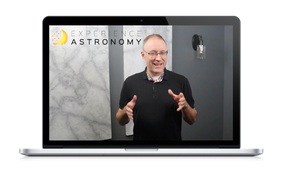
35 fun and engaging video lessons (refilmed and updated in 2024) to help your child understand new and exciting concepts without feeling overwhelmed.
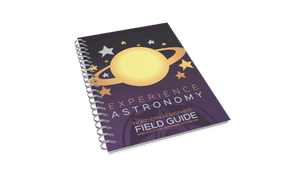
Carefully planned observation activities throughout the year so your child always knows when and where to look in the sky. The sky will come to life!

Online, graded quizzes and exams, so you can take a break from correcting your child’s work.
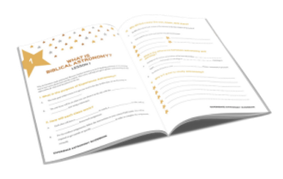
Lesson outlines to help your student grasp important concepts, learn new terms, and help with note taking.
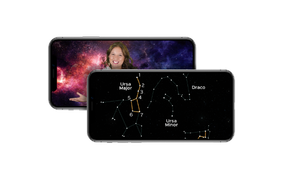
Stargazing video tutorials to help your student with their outdoor observation assignments. It’s the next best thing to having an instructor by your student’s side as they gaze at the stars!
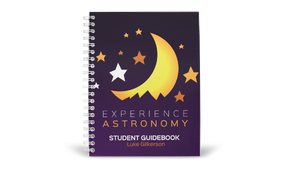
Curriculum guide to help you and your student understand how the course works and how to use the online planetarium when the weather isn’t cooperating.