Earth Science Explored (Level B)
Grade Level: Middle school | Ages: 11-14
Earth Science Explored (Level B) combines engaging video lessons, hands-on labs, and guided assignments to help students explore the dynamic systems that shape our planet—from weather and oceans to geology and the powerful forces beneath the surface.
Every concept is taught from a Christian worldview, helping students discover God’s design and order in the world around them.
Full-year course: $229
✔️ Video Lessons
✔️ Lab Assignments
✔️ Quizzes & Exams
✔️ Reading Assignments
Everything your student needs for a complete digital science course
· 35 weeks of engaging video lessons (two lessons per week), accessible on any device
· Student guidebook (PDF) with fill-in lesson outlines for note-taking
· Weekly homework questions to deepen understanding
· Weekly comprehension quizzes
· Quarterly examinations to assess mastery
· Course guide (PDF) for parents
· Lab manual (PDF) with weekly lab experiments and activities
· Lab videos that walk students step-by-step through each experiment
· 12 months of access—start anytime after purchase
· (NEW!) Lab demonstration videos accompanying labs that require specialty supplies
· Reading assignments (optional) from Novare and Bob Jones Earth Science textbooks—choose the book you prefer—PLUS alternative reading lists for several other textbooks
Full-color student lab guides and guidebooks are available in our bookstore to purchase separately.
Lab supplies (purchased separately)
Laboratory assignments use a combination of specialty and household supplies. You may purchase a complete lab kit or purchase supplies a la carte based on the labs you plan to complete. See the full lab supply list here.
On a tight budget? No problem—each lab that requires specialty supplies includes a lab demonstration video, allowing your student to fully participate and complete the assignment without purchasing additional materials.
Scope & Sequence
Earth Science Explored (Level B) is an engaging middle school course that explores the dynamic systems and processes shaping our planet. Over 35 weeks, students will dive into topics such as the history of plate tectonics, volcanoes, earthquakes, and the water cycle. They will also investigate the Earth’s spheres, from the atmosphere to the hydrosphere, and learn about weather patterns, ocean currents, and climate. Through the incorporation of interactive lessons and hands-on activities, students will build a solid foundation in Earth science concepts and their interconnections.
Lesson 1: Introduction to Earth Science
• What is earth science?
• The metric system
• Introduction to maps
Lesson 2: Topographic Maps
• Cartography
• A brief history of topographic maps
• How to read topographic maps
Lesson 3: Spheres of the Earth
• An introduction to the spheres of the earth: the atmosphere, geosphere, biosphere, hydrosphere, cryosphere, and magnetosphere
Lesson 4: The History of Plate Tectonics
• A brief history of the theories of continental drift and seafloor spreading—the precursors of plate tectonics
Lesson 5: Tectonic Plate Boundaries & Events
• Transform, divergent, and convergent boundaries between plates
Lesson 6: Explosive Volcanoes
• Volcanoes at plate boundaries
• Underwater volcanoes
• Hot spot volcanoes
• Shield, composite, and cinder volcanoes
Lesson 7: Powerful Earthquakes
• Earthquake origins
• Types of seismic waves
• Measuring an earthquake’s magnitude
• Triangulating the epicenter of an earthquake
• Tsunamis
LESSON 8: Exam 1
Lesson 9: Minerals
• Composition and characteristics of minerals
• Mineral formation
• Properties and identification of minerals
Lesson 10: Rocks
• Properties of igneous, sedimentary, and metamorphic rocks
• Rock identification
Lesson 11: Weathering & Erosion
• Physical and chemical weathering
• Movement of sediment by erosion
• Deposition of sediment
Lesson 12: Hydrologic Cycle
• The water cycle
• Surface and groundwater
Lesson 13: Geologic Time Theories
• A Christian foundation for understanding geology
• Uniformitarianism and catastrophism
• An introduction to the diluvial model geologic column
Lesson 14: The Story of the Earth
• Presuppositions of old earth and young earth geologists
• Brief survey of the geologic column and diluvial model
Lesson 15: The Fossil Record
• Fossil formation
• Types of fossils
• Unconformities in the fossil record
• Fossil anomalies
LESSON 16: Exam 2
Lesson 17: Properties of the Oceans
• Features of the ocean floor
• Deep ocean basin sediments
• Properties of ocean water: dissolved gasses, salinity, and density
Lesson 18: Ocean Currents
• Deep ocean currents
• Surface currents
• Longshore currents
• How ocean currents affect weather
Lesson 19: Tides & Complex Weather Patterns
• Tides
• El Niño and La Niña
Lesson 20: Hydrothermal Vents & Deep Sea Ecosystems
• Characteristics of hydrothermal vents
• Hydrothermal vents formation
• Unique ecosystems found around hydrothermal vents
Lesson 21: The Earth’s Atmosphere
• Features of the atmosphere
• Characteristics of each layer of the atmosphere
Lesson 22: The Sun: Our Source of Energy
• Three kinds of heat transfer
• Characteristics of urban heat islands
Lesson 23: Air Circulation & Weather
• Convection currents in the atmosphere
• Jet streams
• Trade winds
• Global wind patterns
• Land and sea breezes
Lesson 24: Weather Maps
• Weather maps
• Symbols of a weather map
• Barometric pressure
• High and low pressure areas
• How to read a weather map
Lesson 25: Storms & Severe Weather
• Weather vs. climate
• Causes of severe weather
• Severe weather safety
Lesson 26: The Earth’s Climate
• Factors affecting climate
• Climate zones around the world
• How plate tectonic movement affects climate
Lesson 27: Exam 3
Lesson 28: The Earth’s Orbit & Seasons
• The habitable zone
• Earth’s orbit
• Rotation vs. revolution
• Seasons
Lesson 29: The Sun-Earth Relationship
• The sun as a unique star
• Electromagnetic spectrum
• Sunspots and solar flares
Lesson 30: Earth in the Solar System
• Meteors, meteoroids, meteorites
• How space bodies affect earth
• Gravity
Lesson 31: The Earth-Moon Relationship
• Moon phases affect tides
• Solar and lunar eclipses
Lesson 32: Renewable vs. Nonrenewable Resources
• Characteristics and uses of renewable resources
• Characteristics and uses of non-renewable resources
• How resources are obtained
Lesson 33: Eutrophication & the Environment
• Eutrophication
• How eutrophication affects life on earth
• Ways to prevent eutrophication
Lesson 34: One Planet, Many Spheres
• Capstone lessons reviewing concepts studied throughout the year demonstrating how the many layers of the Earth work together
Lesson 35: Exam 4
Full-year course: $229
· Pay in full or in 3 monthly installments.
· Generous multi-student discounts available for families with Level B & C students taking the same course in the same year.
· Educational Savings Accounts (ESA) available in many states. Learn more.
Trusted by more than 18,000 homeschool families worldwide
See why so many parents choose Journey Homeschool Academy for hands-on, faith-based science.
As homeschoolers, it can be difficult to find curriculum that not only challenges, but engages our children.
It’s usually one or the other: too easy, too boring, or too hard. Luke and Trisha have been inspired by God to create a curriculum that balances all of that. I love the depth of knowledge they are gaining from the information. They know more than I do now and I’ve been through college geology and earth science! Never before has there been a curriculum that is so versatile in the choice for parents to be hands-off or fully engaged.
~Alisa
I wasn’t sure whether my daughter would be able to manage Earth Science Explored independently.
I love the built in responsibility of having to finish one lesson before the next lesson is available and having to check off boxes of what she’s completed. It takes the ball out of my hands and makes her responsible to know what she’s supposed to be doing. This has been one of the best parts of our homeschool year. It has definitely helped with my daughter’s independence, and helped her learn skills I wasn’t thinking about—like taking notes and studying for a test.
~Leanne
This program literally fell into our laps after searching and toiling over which science curriculum to choose for our boys…
I have a biology degree so I knew I wanted a meaty and informational science curriculum for my children, but not one so cumbersome it weighed us down. I wanted something full and thorough, yet not so rigorous it didn’t offer us time to explore the real world of science happening all around us. I wanted something that allowed my kids to be hands-on, because science is about learning through exploration. But I don’t love a huge mess, so experiments had to make sense, be planned, and not cause a giant hiccup in the rest of our school day.
I tried curriculum after curriculum that seemed as if it should check these boxes, but we kept falling on our faces. Some were so rigorous it was stressful. Some were just boring. Some were so clunky with parts and pieces and no logical layout. I thought I had hit the end of the line, exhausting all options when I happened upon Journey. Thank you for your efforts and helping to check all the boxes for us. Earth Science Explored was the breath of fresh air I had been seeking!
~Kristen
I appreciated learning more about both old earth and young earth views in Earth Science Explored.
As children get older, it’s important for them to learn all viewpoints. They need to understand what they believe and why and be able to effectively communicate their position to others in a respectful way.
~Erin
I needed a more in-depth science course for my very science-minded daughter that she could do mostly on her own.
The content has been very accurate and the right depth for middle school. The quizzes and tests have required studying but aren’t overly challenging, so my daughter doesn’t feel discouraged. I love that your program not only teaches science, but teaches note-taking and study skills as well. My daughter has gained a lot of confidence in her ability to study and take tests this year!
~Justine
I wanted a solid science program, one where I didn’t have to teach my daughter myself…
but what most won me over was when my daughter referenced something in Scripture after her science lesson—it brought it all together and that was the best part. You can feel confident and assured your kids will learn, have fun, and be given a biblical worldview when they’re signed up for this program!
~Jenna
We were looking for a science curriculum with a biblical worldview, without an enormous amount of textbook reading.
We had used an online curriculum the last two years, but it just didn’t fit my son’s learning style. My son’s learning style is visual-spatial, so “hands-on” curricula works best for him. I love that I can rely on the video teaching. The fill-in-the-blank notes have really helped him stay engaged during the lecture and shows he wasn’t just going through the motions of doing schoolwork. It’s a blessing to know he’s doing well in this subject with very little investment of my time.
~Melanie
Our middle schooler was ready for a more formal and challenging science, and Earth Science Explored delivered on all counts!
My daughter was eager to do science every day and ends nearly every lesson and lab with, “That was really cool!” I think it’s important, along the way, for children to hear voices other than our own, but I’m very particular about who those voices are. I couldn’t be happier that we have invited Luke and Trisha into our school days.
~Mandy
I had zero concerns about this curriculum because it’s the third JHA course we’ve used.
I knew my kids would be stretched academically, and I could trust the content. I loved the fact that this course required my kids to take notes, complete reading assignments, and monitor their own progress—growing them up a little.
~Lisa
I love how your program approaches old and young earth theories.
This has led to great discussions. My daughter couldn’t tell which theory you believed based on your lecture. We discussed how the best teachers present you with all the facts and let you make your own opinion.
~Justine
We used your elementary level courses, and loved them. I was hoping the middle school level class would be a good fit for us…
It totally was! All the parts of the class work really well together. I’ve watched the videos with my kids, and we’ve learned so much. This class has been great for my whole family!
~Jenni
You’ve got questions… we’ve got answers
What is covered in the course?
Great question! Check out the Earth Science Explored Scope and Sequence here for an overview of the topics we cover in this course.
What is included in my purchase?
You’ll have access to all lesson and lab videos along with PDF downloads of the student guidebook, lab guide, curriculum guide, answer keys, and additional resources on geological time theories.
Should you want a physical copy of the guidebook or lab guide, those are available for purchase in our store. It is highly recommended that you purchase one of the following textbooks: Novare Earth Science or Bob Jones Earth Science.
Novare is written from an Old Earth perspective; Bob Jones is written from a Young Earth perspective
You will also be responsible for purchasing lab supplies for any labs you’d like your student to complete.
When does the course begin?
You’ll have immediate access to the course as soon as you register!
Since this course is self-paced, you, the parent, have control over when your student begins the course. You can start as soon as you register, or wait a few weeks or months. Beginning the course is as easy as pressing a button. Once you begin the course for your student, they will have one year to access the course.
How long will I have access to the course?
You’ll have access to the course for one year from your start date — you choose the start date. There are 35 weekly lessons, so that should provide ample time for your student to complete the course. Once each video is live, your student can watch and re-watch it anytime they would like to throughout the duration of the course.
Does my child have to view the course videos on specific days?
No, students can watch the lessons any time throughout the week. Once released, each video can be reviewed as many times as the student wants through the end of the course.
Can I take this course if I live outside the United States?
You sure can! We’ve made sure to make the lessons applicable to those worldwide. We’re excited to welcome our friends in other countries to join us as we study the stars—both northern and southern hemispheres.
Can I enroll more than one child in this course at the same time?
In the upper level course, each student receives their own grade, online portal, and auto-graded quiz so each student should enroll separately. We do offer generous multi-student discounts for families enrolling more than one student in the class at the same time.
Can we use a different textbook for this course?
We believe parents are best equipped to determine their student’s educational needs. As a homeschool course, you’re welcome to choose whatever textbook you’d prefer for your student to use or omit textbook reading altogether if you’d prefer. For most students, anytime they can use multiple modes of learning, it helps them retain information better.
After reviewing many, many textbooks we chose Novare Earth Science and Bob Jones Earth Science because we believed these textbooks did an excellent job of reinforcing the concepts students are learning in the lectures. We provide recommended reading from them, however, if you choose another textbook you’ll need to be sure to assign students what you’d like them to read each week.
Please Note: Novare Earth Science is taught from an old Earth perspective and Bob Jones Earth Science is taught from a young Earth perspective. We present information on both theories within the course and provide parents with more resources to present their students on one or both theories as they see fit. We believe students need to be exposed to both perspectives as they will encounter these in the wider world and within the church. We recommend parents choose the textbook they feel most comfortable with.
We have also created alternative reading schedules to accompany several other commonly used textbooks by homeschoolers. While we cannot vouch for every detail in these textbooks, the reading lists provided here generally overlap with what is covered in each of the lessons in the course.
In addition to our recommended textbooks, we currently have a reading list available for the following textbooks:
• Discovering Design With Earth Science, Berean Builders (1st edition)
• Science: Earth and Space, Abeka (1st edition)
What additional books and supplies will I need?
Students will need a number of different supplies to complete the labs and activities work. See the complete Earth Science Explored Lab and Activity List.
It is highly recommended, though not required, that you purchase one of our recommended textbooks — Novare or Bob Jones Earth Science. While this is our preferred textbook for the class, we’ve also included reading lists for several other textbooks, or you may omit textbook reading.
A PDF download of the Student Guidebook and Lab Guide are available as part of the course purchase.
How long do students have to complete individual lessons?
We recommend students plan to complete one lesson per week to finish the course at a typical school year. Once your student begins the course they will receive access to the next lesson within 1-2 hours of completing the current lesson. This allows you the flexibility to work ahead if needed to account for vacations or time off while still finishing the course in the typical timeframe.
Students will have a full calendar year to complete the course, so if they fall a week or two behind, they should still have plenty of time to complete the course.
Do you discuss the age of the earth in this course?
In middle school Earth Science (Level B) we always acknowledge the creator of the universe. We also address the various theories behind the age of the earth. We know there are Christian scientists in both old earth and young earth camps who disagree passionately on this topic.
We present information on both theories within the course and provide parents with more resources to present their students on one or both theories as they see fit. We believe students need to be exposed to both perspectives as they will encouter these in the wider world and within the church.
While we do not give students the answer to this question, we give them the framework to begin to understand the differences and think critically about each position—and we encourage parents to join in on this discussion with their students.
Can I pay for this course with my educational savings account?
We are an approved vendor with several ESAs and are continuing to add to the list all the time! We’re happy to provide you with invoices or other information you need to submit to your ESA. You can see all the ESAs we’re currently approved vendors with and/or submit a request for us to apply to the ESA in your state.
What is your refund policy?
We offer a 100% money-back, happiness guarantee within 30 days of the course start date OR 6 months from purchase date (whichever is less). Simply email us and we’ll give you a full refund.
Understanding the Fabulous Fit Promise
We have a Fabulous Fit Promise. We want this course to be a fabulous fit for your family. Based on our parent and student feedback, we think you will be delighted with the course.
However, we offer a 100% money-back, happiness guarantee within 30 days of the course start date OR 6 months from purchase date (whichever is less). Simply email us and we’ll give you a full refund.
Our Fabulous Fit Promise: 100% Money Back, Risk Free
See inside the student dashboard
Curious what the course looks like once you’re enrolled?
This short tour walks you through the student dashboard so you can see how lessons, downloads, assignments, and quizzes are organized.
Course Features
35 fun, engaging video lessons to help your child understand new and exciting concepts without feeling overwhelmed
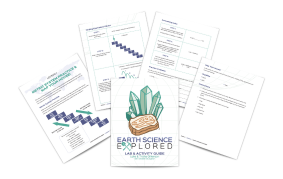
Carefully planned labs and activities so your child can explore earth science—hands on!
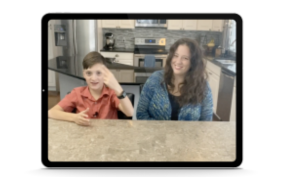
Lab video guides for the labs and activities that are a bit more difficult to understand
Online, graded quizzes and exams, so you can take a break from correcting your child’s work
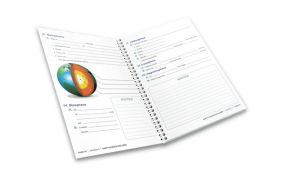
Lesson outlines to help your student grasp important concepts, learn new terms, and help with note taking.
Reading assignments that will help your student further their understanding of the course material in a new way
Still deciding? Explore your options.
Choose the next step that fits your student best.
Discover how matter and energy behave through experiments, real-world applications, and problem-solving.
Learn how Earth works through weather, climate, geology, and the systems that shape our planet.
Explore the universe as students study planets, stars, galaxies, and the forces that shape space.