Experience Astronomy Elementary
Grade Level: Elementary | Ages: 6-12
Experience Astronomy Elementary (Level A) combines engaging video lessons, hands-on activities, and guided assignments to help students explore the incredible universe around us—from the moon and stars to planets, galaxies, and beyond.
Every concept is taught from a Christian worldview, helping students discover God’s power and creativity displayed across the heavens.
Complete Program: $189
For your entire immediate family!
✔️ Video Lessons
✔️ Lab Assignments
✔️ Quizzes & Exams
✔️ Reading Assignments
Everything your student needs for a complete digital science course
· 30 fun video lessons so you can take a break from teaching and still give your kids a solid education
· Dozens of hands-on activities you and your child can to do together that will bring the lessons to life
· Recommended reading lists with books that can be read aloud or assigned as independent reading to further your child’s understanding of astronomy and build reading skills
· Memory work to strengthen your children’s minds and commit important foundational facts to their long-term memory
· Copywork that accompanies every lesson to reinforce key concepts while practicing handwriting skills
Scope & Sequence
Experience Astromony Elementary (Level A) is an engaging course that takes young students on an exciting journey through the wonders of the night sky and beyond. Throughout the year, learners will explore fundamental concepts such as the Earth’s rotation and revolution, the phases of the moon, and the constellations that have fascinated cultures for centuries. They will gain insight into the solar system, studying the sun, planets, and phenomena like eclipses and meteors. The course also dives into historical perspectives, including early astronomical discoveries and the stories behind famous constellations. Through interactive lessons that emphasize hands-on activities and storytelling, students will develop a solid understanding of astronomy and its importance, fostering a sense of wonder about the universe while connecting it to their everyday lives.
Lesson 1: Why God Loves Astronomy
God is the creator of the sun, moon, and all the stars in the sky. God gave us the lights in the sky to give us the rhythms of day and night, to help us mark the seasons of the year, and to give us light so we can see.
Lesson 2: Who Moved the Sun?
God designed the Earth to spin around on its axis. When the Earth does this one time, we call this
a day. To help us organize our lives, we’ve divided a day into 24 hours.
Lesson 3: Blazing Summers, Freezing Winters
God designed the Earth to revolve around the Sun, which is our main source of light and heat.
When the Earth goes around the Sun one time, we call this a year. Since the axis of the earth is
tilted, there are times of year we get more sunlight and other times we get less sunlight,
depending on where we are in our path around the Sun.
Lesson 4: Spring Forward, Fall Back
As the Earth goes around the Sun, there are a couple days every year we have the same amount
of daylight hours as we have nighttime hours. These days are called “equinoxes.”
Lesson 5: Hello Moon!
God gave the Earth a satellite we call the Moon. As the Moon revolves around the Earth, we can see more or less of the side of the Moon that is lit up by the Sun. We call these different shapes of the moon “phases.”
Lesson 6: There Are Giants in the Sky!
On a dark night, you can see thousands of stars in the sky! For thousands of years, people have imagined the stars make shapes or pictures in the sky. We call these pictures “constellations.”
Lesson 7: From North Star to Southern Cross
God gave us the stars in the sky to serve as signs to help us find our way. Using certain stars in the sky, people can easily find north, south, east, and west.
Lesson 8: Stories in the Sky
In modern times, astronomers count 88 constellations, but many of these constellations go back to ancient times. There were many groups of people from long ago who told mythological stories
about these shapes in the sky.
Lesson 9: More Stories in the Sky
There’s a special group of 12 constellations called the Zodiac. These are special because, when standing on the Earth, these constellations seem to line up with the Sun in the sky at different times of the year as the Earth makes its way around the Sun.
Lesson 10: Watch Out for Wandering Stars!
In ancient times they were called the wandering stars—dots of light that moved differently than all the other stars in the sky. Today we call these dots of light “planets,” and we know they are not stars but large objects revolving around our star, the Sun.
Lesson 11: Around the World
At first, people believed the world was at, like a disk floating in the air. But hundreds of years before Christ, people started to believe the world was actually a sphere, like a ball. They knew this because as they traveled north or south, they saw new stars in the sky, showing they were not traveling on a flat surface but a curved surface.
Lesson 12: Blackout!
Solar eclipses are some of the most amazing events to witness in the sky. They happen when the Moon comes between the Sun and the Earth, blocking the Sun’s light.
Lesson 13: Bye Bye Moon!
Lunar eclipses are wonderful nighttime events to witness. They happen when the Sun’s light is blocked from hitting the Moon for a short time because the Earth gets in the way. The shadow of the Earth falls on the Moon.
Lesson 14: Falling Rocks and Shooting Stars
Meteors are sometimes called “shooting stars,” but they aren’t stars at all. Instead, they are bits of rock slamming into the Earth’s atmosphere and burning up, creating big streaks of light in the sky. Sometimes parts of these rocks make it all the way to the Earth’s surface.
Lesson 15: Galileo’s Head was on the Block
Astronomers in the 1500s and 1600s made some very important discoveries about the Earth. They helped to show others the Earth was not the center of everything. Instead, the Earth and all the other planets revolve around the Sun.
Lesson 16: Earth – Baby Bear’s Porridge
What makes the Earth so special? Why do we find life on Earth, but we don’t find life in other places in the solar system? This lesson explores some of the things that make the Earth so unique.
Lesson 17: The Man on the Moon
The moon is Earth’s only natural satellite—close enough we can see what the surface looks like with just our eyes. This rocky world looks like a good place to set up a colony, but just how easy would it be?
Lesson 18: Mr. Golden Sun
At the center of the solar system is a star that has 600 times more mass in it than all the planets combined! We call it the sun. Every second it puts out a lot of energy—and the secret to its energy is deep down in the core.
Lesson 19: Mercury – The Swift Messenger
Close to the sun is a barren rocky world we call Mercury. The smallest of all the planets, Mercury is covered in big cliffs, deep craters, blazing hot days, and freezing cold nights. Could we set up a colony on such an extreme place?
Lesson 20: Venus – Earth’s Fiery Sister
The second planet from the sun—nearly the same size as the Earth—is covered in bright clouds, but beneath those clouds is a mysterious, terrifying world. If we drop beneath those clouds, will we find a planet suitable for a human colony?
Lesson 21: Mars – The Red Planet
Named after the Roman god of war, the planet Mars looks like a drop of blood in the sky. But as we get closer, we see this rusty, red planet is home to some record-setting surprises. Would this desert world be a good place to set up a home base?
Lesson 22: Space Rock ‘n’ Roll
For many years, astronomers wondered why there was such a big space between Mars and Jupiter. It looked like a perfect place for a planet. Finally astronomers started seeing not just one planet but many, many space rocks. Today, we call it the Asteroid Belt.
Lesson 23: Jupiter – By Jove! It’s a Giant!
Ancient people named Jupiter after the king of the gods. Little did they know that Jupiter is the king of the planets in the solar system. It is the largest, fastest spinning planet—having more mass than all the other planets combined times two!
Lesson 24: Saturn – Put a Ring on It
Ancient people believed Saturn was the planet furthest away from the Earth as it moved slowly through the sky. But what they couldn’t see was all of Saturn’s beautiful rings that make it the most recognizable planet in the solar system.
Lesson 25: Uranus – A Topsy Turvy World
No one in the ancient world knew about Uranus. It’s so dim in the sky, no one paid any attention to it. But when people saw it through their telescopes for the first time, they knew it was no ordinary light in the sky, but a new planet going around our sun.
Lesson 26: Neptune – The Blue Ice Giant
At first Neptune might look like a boring blue ball. But don’t get too close, because Neptune is home to the fastest winds in the whole solar system. This frozen world is full of surprises.
Lesson 27: Ice, Ice Baby (Too Cold)
Beyond Neptune are millions of little (and big) chunks of ice in a region called the Kuiper Belt. This is an area full of dwarf planets, comets, and things called “cubewanos.” It’s an icy, cold place
that will take us a long time to explore.
Lesson 28: Planets Galore!
When you think of planets, you probably think of the ones going around our sun. But there are thousands and thousands of other planets out there orbiting other stars. And we are discovering new “exoplanets” every year.
Lesson 29: The Immeasurable Heavens
We can see over 9000 stars in the night sky without using a telescope. When we use powerful telescopes we can see beyond these stars to see not just more stars but whole galaxies full of billions of stars. It’s hard to imagine just how big the universe is.
Lesson 30: The Heavens Are the Lord’s Heavens
Psalm 115:16 says, “The heavens are the Lord’s heavens, but the earth he has given to the children of man.” As amazing as the rest of the universe is, the more we explore it the more we learn: there is no place like home.
Full-year course: $189
· Pay in full or in 3 monthly installments.
· Generous multi-student discounts available for families with Level B & C students taking the same course in the same year.
· Educational Savings Accounts (ESA) available in many states. Learn more.
Trusted by more than 18,000 homeschool families worldwide
See why so many parents choose Journey Homeschool Academy for hands-on, faith-based science.
It was our first year homeschooling and I wanted something that would be a good fit for both of my kids and would adapt to their levels...
I appreciated the ease of sitting down with my kids, opening the video and watching each lesson explained very clearly with lots of interesting historical, geographical, and scientific information. The great visuals on the videos helped us with the concepts being introduced.
My kids and I have grown to love science! Thank you for your investment in families like ours.
I needed a pick-up-and-go science program with a Christian foundation.
I homeschool 3 kids that range in ages from 8 to 11 and wanted something we could do together that wasn’t difficult to understand, but not dumbed down either. Everything in Experience Astronomy is taught through the lens of God’s Word. It’s thorough and engaging, with a great list of recommended reading that really enhances what’s taught.
I’m learning almost as much as the children. We’re having amazing discussions about the stars, space, mythology, God, and our place in the universe!
I was concerned about the cost of Experience Astronomy, because it would only be one year of science…
but Experience Astronomy has proven to be a good value and high-quality course that all the kids can do together. And knowing we have lifetime access is great because we can go back through it again with my 2 youngest kids after they’re older.
My daughter was hating school because it wasn’t fun. I really wanted her to enjoy learning…
...but I’m not a science person and didn’t know how to make science fun. This program has been a lifesaver! It's opened up a new world to my daughter, she’s asking questions about space, and pointing out things she’s learned to her dad.
My daughter’s now enjoying school and both of us have loved learning about astronomy. I’ll be signing her up for the high school program when she’s old enough.
My kids look forward to these lessons every week!
The lessons make learning about a complex subject both fun and easy. And the videos are well produced, informative, and just about the right length for short attention spans. Luke is personable, enthusiastic, and my kids can relate well to him.
I was concerned about the cost, but knew I was going to struggle with getting the fun, but important subjects done…
We had a new baby arriving this year and a herd of goats to manage daily. Experience Astronomy was perfect for this time of our life because it was so easy to use. I liked that the lessons were brief, but deep. And five of our seven kids were able to enjoy them, which was such a gift to me because with such a span of ages its hard to find something we can all enjoy
Experience Astronomy provides a great and easy to assimilate science into even the busiest of weeks.
I liked most of all that we could sit down and learn without a lot of prep time!
As a mom homeschooling several grade levels at once, having a course that was complete but didn’t take a lot of my time to prep was important. But most of all, I appreciated that I could trust the content because it was based in Scripture.
You’ve got questions… we’ve got answers
What is covered in the course?
Great question! Check out the Elementary Astronomy Scope and Sequence here for an overview of the topics we cover in this course.
What ages or grades is this course appropriate for?
The class is geared towards kids 6-11 years of age, but younger students may also enjoy the course. For older students, we recommend our Upper Level Experience Astronomy program.
As the parent, you are the best person to determine if this class is appropriate for your student. Click on “Preview” above to get a taste for the course.
What additional books or supplies will I need for this course?
We'll provide you with a reading list of living books that you can purchase or borrow from your local library. You'll also have an activity you can complete with each lesson, but we've tried to ensure these activities use supplies that are typically found around the house or those that are easily accessible.
Please note: The books and activities are completely optional. The program is completely customizable and you can do as much or as little as you like!
Some parents choose to use the included PDF downloads of the lesson cards and student adventure guide. However, if you'd prefer the full-color printed versions, you may purchase them separately.
Do I need to enroll each of my children separately?
No. When you purchase Experience Astronomy Level A you may use the course with all the children in your immediate family.
After enrolling, when will I get access to the course materials?
You'll have immediate access to the entire course as soon as you register.
Can my public or private school child enroll in the course?
Of course! While it certainly is a great course for homeschoolers, this course is great for any student who wants to learn more about astronomy whether they’re homeschooled, public schooled, or private schooled. You have the flexibility to complete the course whenever you’d like!
Can I take this course if I live outside the United States?
You sure can! We’ve made sure to make the lessons applicable to those worldwide. We’re excited to welcome our friends in other countries to join us as we study the stars—both northern and southern hemispheres.
Do you offer options to use this in a co-op?
Yes, however the course is set up slightly different to accommodate groups going through the course together. Learn more about our co-op options here.
How long will I have access to this course?
You'll have lifetime access to the course. This means you can pace your kids through the course any way you want or go back and use the course with more kids later on.
What is your refund policy?
We have a fabulous fit promise! For our elementary courses, that means you have 30 days from when you purchase to review the course. If it's not a fabulous fit for your family — simply email us and we'll give you a full refund.
Can I pay for this course with my Educational Savings Account?
We are an approved vendor with several ESAs and are continuing to add to the list all the time! We’re happy to provide you with invoices or other information you need to submit to your ESA. You can see all the ESAs we’re currently approved vendors with and/or submit a request for us to apply to the ESA in your state.
Which class is right for my child: the elementary or the upper level course?
The elementary-level course is designed for students in the elementary grades.
• Video lessons are shorter than the upper-level videos and taught using simpler language for younger viewers.
• The concepts taught in the elementary course are more basic, whereas the upper level course includes the basic concepts and goes much deeper.
• Activities in the elementary course include more hands-on creative projects whereas the upper-level has weekly outdoor observation activities (often in the late evening or early morning) which are more appropriate for those looking for an observational/lab science.
• Reading assignments for the elementary course are living books that can be used as read-alouds or assigned as independent reading, geared towards students ages 6-11. The recommended reading for the upper-level is a textbook geared more towards teens.
• Supplemental activities for the elementary course include things like copywork and memory cards, suitable for elementary level students.
Does my child have to view the course videos on specific days or times?
Nope! Everything is recorded and will be available for you to watch on your time schedule.
Do you teach about creation or evolution in this course?
While this class touches on the reasons why God created the stars, it does not get into concepts about the age of the universe or scientific theories about the beginning of the universe. The course does not touch on how to interpret the days of creation in Genesis 1. The focus of the class is to discover the motions of the heavens, not the creation or history of the heavens.

Understanding the Fabulous Fit Promise
We have a Fabulous Fit Promise. We want this course to be a fabulous fit for your family. Based on our parent and student feedback, we think you will be delighted with the course.
However, we offer a 100% money-back, happiness guarantee. For our elementary courses, that means you have 30 days from when you purchase to review the course. If it’s not a great fit for your family — let us know and we’ll give you a full refund.
Our Fabulous Fit Promise: 100% Money-Back, Risk-Free
See inside the parent dashboard
Curious what the course looks like once you’re enrolled?
This short tour walks you through the parent dashboard so you can see how lessons, downloads, assignments, and quizzes are organized.
What's Included?

30 Exciting Video Lessons
Effortlessly immerse your child in the world of astronomy. You take a breather while your child goes on a riveting educational adventure.
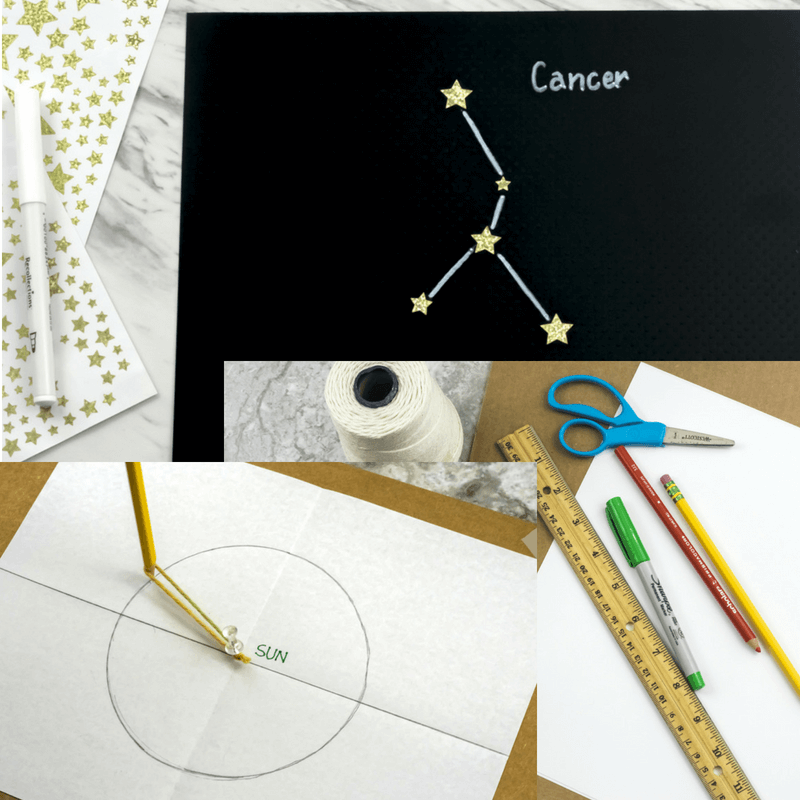
Dozens of Hands-On Activities
These easy projects make science fun and tangible — using supplies you probably have at home or that are quick and easy to find.
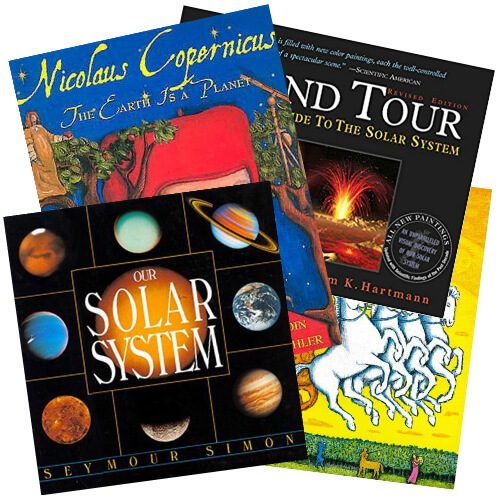
Recommended Astronomy Books
Extend your child’s learning with living books curated for their ability to fascinate and educate, perfect for read-aloud and independent reading.
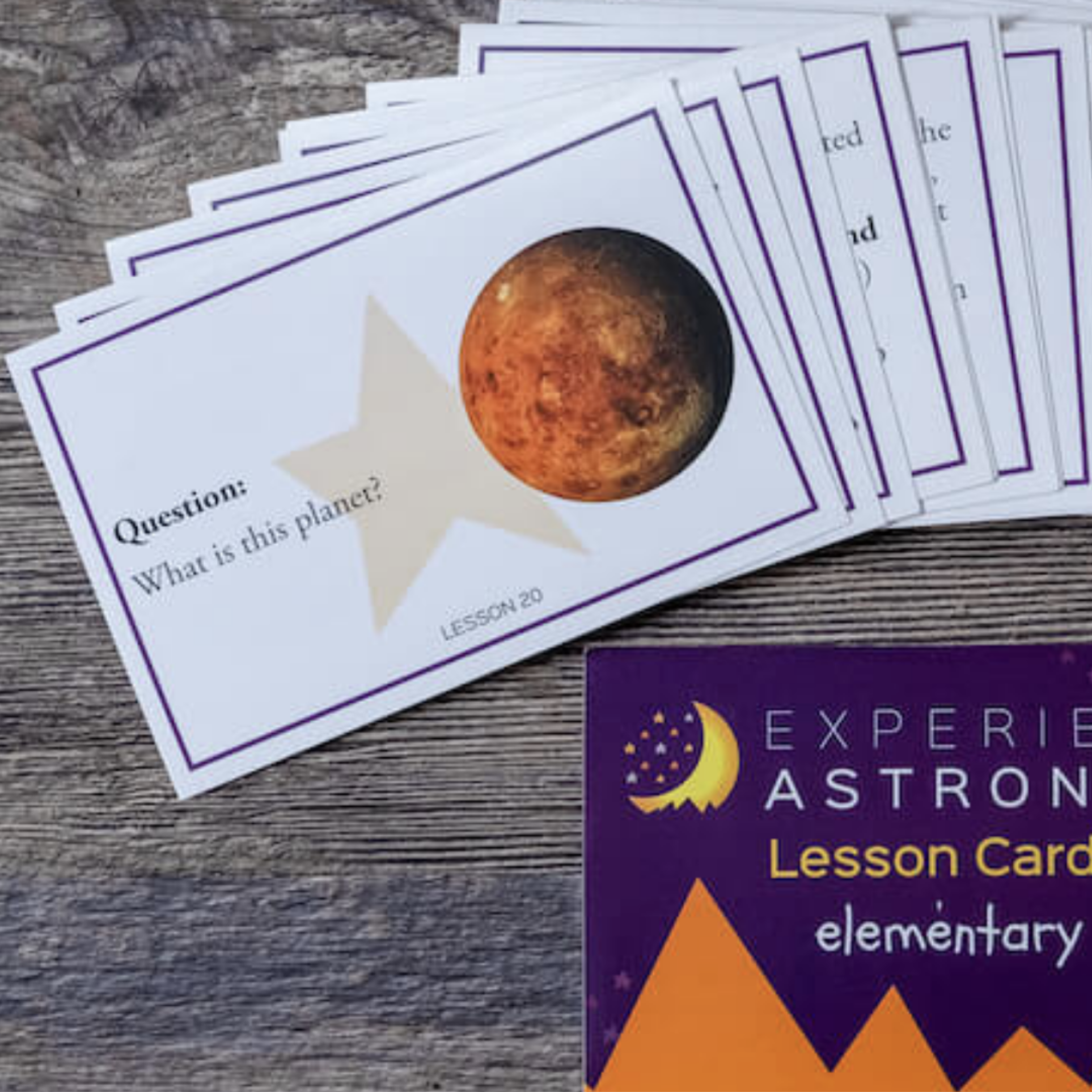
Fun Memory Work
Your child will love sharing all the amazing science facts they’re learning all year long with the convenient course memory videos and cards.

Engaging Copywork
Each lesson includes easy-to-use copy activities that reinforce science concepts while improving handwriting.
Still deciding? Explore your options.
Choose the course that fits your student best.
Discover how living things grow and change through observation and simple experiments.
Discover how things move, change, and interact through simple hands-on experiments.