Discover Physics (Level C)
Grade Level: 9th – 12th | Ages: 14+
Discover Physics (Level C) is an honors-level high school course that combines engaging video lessons, interactive labs, and real-world experiments to help students grasp the fundamental laws that govern our world.
Taught by experienced educators who make science both fun and practical, this course develops problem-solving and critical thinking skills while preparing students for college-level STEM studies—no physics background required.
Full-year course: $329
✔️ Video Lessons
✔️ Lab Assignments
✔️ Quizzes & Exams
✔️ Reading Assignments

Everything your student needs for a complete digital science course
· 35 weeks of engaging video lessons (2 lessons per week), accessible on any device
· Lab manual (PDF) with weekly laboratory experiments and activities
· Student guidebook (PDF) with fill-in lesson outlines for note-taking
· Weekly homework questions or practice equations to deepen understanding
· Weekly comprehension quizzes
· Quarterly examinations to assess mastery
· Course guide (PDF) for parents
· Lab videos that walk students step-by-step through each experiment
· Certificate of completion
· 12 months of access—start anytime after purchase
· (NEW!) Lab demonstration videos accompanying labs that require specialty supplies
· Reading assignments (optional) from our recommended textbook Conceptual Physics or alternative reading lists for several other textbooks.
Full-color student lab guides and guidebooks are available in our bookstore to purchase separately.
Lab supplies (purchased separately)
Laboratory assignments use a combination of specialty and household supplies. You may purchase a complete lab kit or purchase supplies a la carte based on the labs you plan to complete. See the full lab supply list here.
On a tight budget? No problem—each lab that requires specialty supplies includes a lab demonstration video, allowing your student to fully participate and complete the assignment without purchasing additional materials.
Scope & Sequence
This honors-level high school course provides a comprehensive introduction to the fundamental principles of physics. Students will engage in rigorous study, problem-solving activities, and hands-on experimentation to help them understand the laws governing our physical world. Students delve into topics spanning motion, forces, energy, waves, electromagnetism, and the revolutionary concepts of relativity and quantum physics with an emphasis on mathematical applications for modeling natural phenomena.
Prerequisite: Completion of Algebra 1.
Lesson 1: Introduction to Physics
· Laws of physics
· Proportions and mathematical models
· Measurement and units
· Graphing as a modeling tool
Lesson 2: A Brief History of Physics
· Natural philosophy
· Classical physics
· Modern physics
· Aristotle, Galileo, Newton, and Einstein
Lesson 3: Vibrations & Waves
· Vibrations and energy
· Period, frequency, and wavelength
· Amplitude
· Interference
· Wave equation
Lesson 4: Sound Waves
· Medium of transmission
· Speed of sound
· Interference and acoustics
· Doppler effect
Lesson 5: Light & Color
· Electromagnetic waves and the electromagnetic spectrum
· Energy, frequency, and wavelength
· Rods and cones
· Color absorption and emission
Lesson 6: Wave Optics
· Reflection and refraction
· Mirrors and lenses
· Lensmaker’s equation
Lesson 7: Temperature & Heat
· Thermal energy
· Absolute vs relative temperature
· Melting, freezing, boiling, and condensing
· State vs. temperature and pressure
· Heat capacity
Lesson 8: Heat Transfer
· Conservation of energy
· Conduction, convection, and radiation
· Newton’s law of cooling
Lesson 9: Thermodynamics
· Three laws of thermodynamics
· Entropy
· “Zeroth” law of thermodynamics
· Heat cycles
· Engines
Lesson 10: Exam 1
Lesson 11: Linear Motion (Part 1)
· Frame of reference and measuring motion
· Speed, direction, and velocity
· Distance vs. time graphs
· Constant motion
Lesson 12: Linear Motion (Part 2)
· Changing motion, acceleration
· Average speed vs instantaneous speed
· Distance and velocity
· Acceleration graphs
· Acceleration due to gravity
Lesson 13: Two-Dimensional Motion
· Vectors/2D math
· Changing direction as acceleration
· Solving simultaneous equations
· Projectile motion
· Circular motion
Lesson 14: Newton’s Laws of Motion
· Newton’s first law
· Inertia and mass
· Newton’s second law
· Cause and effect
· Newton’s third law
Lesson 15: Specific Forces
· Gravity
· Normal force
· Friction and air resistance
· Pressure and force
· Centripetal force
Lesson 16: Momentum
· Defining momentum
· Momentum and Newton’s second law
· Law of conservation of momentum
· Closed systems and collisions
Lesson 17: Energy of Motion
· Defining and measuring energy
· Potential and kinetic energy
· Conservation of energy
Lesson 18: Rotational Motion
· Similarity between rotational and linear motion
· Rotational speed and acceleration
· Linear motion as part of rotational motion
Lesson 19: Rotational Mechanics
· Force vs. torque
· Mass vs. rotational inertia
· Rotational inertia of various solid shapes
· Newton’s laws in rotation
Lesson 20: Exam 2
Lesson 21: Electrostatics
· Electric charge
· Polarization
· Scientific notation
· Coulomb’s law and problem solving
Lesson 22: Electric Fields
· Electric potential
· Potential differences
· Fields of point charges
· Fields of surfaces and shapes
· Capacitors
Lesson 23: Electric Current
· Conventional current
· Conductors vs. resistors
· Closed vs. open circuits
· Potential and voltage
· Ohm’s law
Lesson 24: Series & Parallel Circuits
· Circuit diagrams and features
· Series vs parallel definitions
· Ohm’s law in series and parallel
Lesson 25: Magnetism
· North vs. South
· Strength of force and magnetic fields
· Magnetic equations
Lesson 26: Electromagnetism
· Moving charges
· Changing fields
· Interconnectivity
· Right-hand rule
Lesson 27: Exam 3
Lesson 28: Special Relativity (Part 1)
· Classical relativity
· Spacetime
· Time dilation and time travel
· Lorentz transformation
Lesson 29: Special Relativity (Part 2)
· Length contraction
· Energy and momentum
· Mass-energy equivalence
Lesson 30: Universal Gravitation
· Kepler’s laws of planetary motion
· Newton’s law of gravity
· Einstein’s general relativity
Lesson 31: Atomic & Nuclear Physics
· Atomic structure
· Nuclear radiation
· Nuclear fission and fusion
Lesson 32: Introduction to Quantum Physics
· Quanta defined
· Blackbody radiation
· Planck’s constant
· The photoelectric effect
· Electron energy levels
· Standard model of particle physics
Lesson 33: Quantum Systems
· Two-slit interference of light
· Two-slit interference of other particles
· de Broglie wavelengths
· Wave functions and Schrödinger’s wave equations
· Heisenberg’s uncertainty principle
Lesson 34: Quantum Theories (Things Just Got Weirder)
· Copenhagen interpretation
· Schrödinger’s cat
· Pilot wave theory
· Many worlds theory
· Quantum tunneling
· Quantum entanglement
Lesson 35: Exam 4
Full-year course: $329
· Pay in full or in 3 monthly installments
· Generous multi-student discounts available for families with Level B & C students taking the same course in the same year
· Educational Savings Accounts (ESA) available in many states
Trusted by more than 18,000 homeschool families worldwide
See why so many parents choose Journey Homeschool Academy for hands-on, faith-based science.

The thought of taking Physics was daunting!
When we started homeschooling, I never dreamed I would have a child that would take high school physics, let alone attempt it at home. My strengths are not in math & science. Thanks to Journey Homeschool Academy, advanced high school science classes have been a positive experience for us! I have confidence my son will be graduating from high school with a quality, rigorous science foundation and will be well prepared for post-secondary education.
With 8 kids to homeschool, I needed to delegate some of the teaching to someone else…
Discover Physics is not only quality educational content presented clearly and enthusiastically by excellent teachers, it has an independent learning format for students. This was such a good choice for our family!
If I just had a textbook, I wouldn’t be able to understand Physics…
However, the videos make the concepts easy to understand and follow. The visuals really help me grasp what being taught. And if I still don't get it, the ability to contact real teachers is life-changing!
I see so many people put their kids back in school when they get to high school, because they lack the confidence to teach high school science…
…thanks to you guys, that is no longer an excuse. The videos in this course are top notch and I like the layout of the workbook with the opportunity it provides to learn notetaking skills. This is a challenging course, designed well, and taught from a biblical worldview. Thank you for working so hard to put these amazing courses together!
I had taken Experience Chemistry and Discover Physics was the next one on my list...…
What I like most about the course is how Luke and Trisha explain the topics in new ways from one another as it helps me better understand the concepts. I’ve also appreciated the pre-made notes!
With physics, I was mostly concerned about labs and helping my student with homework…
I love that Discover Physics included all the teacher guides and helps so I could help out even when I didn’t know the exact answer myself. And I really appreciated that it was online and my student could work independently, so I could help my younger students who need more one-on-one time.
I so appreciate the perfect blend of faith and science in this course.
The Gilkersons have a logical, faith-based approach to creation. They don’t try to make it preachy like some Christian curricula, but maintain a high-standard for science academics. I love that my children have their faith and beliefs validated and enhanced while still getting high-quality academics.
You’ve got questions… we’ve got answers
What’s included in my purchase?
You’ll have access to all lesson and lab videos along with PDF downloads of the student guidebook, lab guide, curriculum guide, answer keys, homework help videos, and sample lab reports.
Should you want a physical copy of the guidebook or lab guide, those are available for purchase in our store. It is highly recommended that you purchase the textbook Conceptual Physics.
You will also be responsible for purchasing lab supplies for any labs you’d like your student to complete.
Are there any math prerequisites for this course?
Your student should have completed an algebra 1 course prior to taking this physics course. This is a rigorous math-based, physics course.
When should my student take this course? What grade?
We recommend students take this course in the 11th or 12 grade. Many parents choose to list this course as an honors course on their student’s high school transcript. There is a lot of math and the course moves at a fast pace to cover all of the material.
If you are looking for a class for younger students or students you’re not sure would be able to keep up with the pace of this course, we recommend checking out our Astronomy, Biology, or Earth Science courses. These courses are less advanced, but still appropriate for students seeking a science class for high school credit.
When does the course begin?
You’ll have immediate access to the course as soon as you register!
Since this course is self-paced, you, the parent, have control over when your student begins the course. You can start as soon as you register, or wait a few weeks or months. Beginning the course is as easy as pressing a button. Once you begin the course for your student, they will have one year to access the course.
How long will I have access to this course?
You’ll have access to the course for one year of access — you decide when your student begins the course. There are 35 weekly lessons, so that should provide ample time for your student to complete the course. Once each video is live, your student can watch and re-watch it anytime they would like to throughout the duration of the course.
Does my child have to view the course videos on specific days or times?
No, students can watch the lessons any time throughout the week. Once released, each video can be reviewed as many times as the student wants through the end of the course.
Can my student earn high school credit for this course?
In most states, students need to accumulate at least 120 hours of instruction and course work to receive a high school credit.
Many parents choose to record Discover Physics as an honors level lab-science on their student’s high school transcript. We recommend your student complete all of the following to accumulate the necessary course hours for high school credit:
- complete all the course lectures
- take all the quizzes and exams
- complete recommended readings
- watch laboratory videos and complete a minimum of 15 lab assignments
How you use this course and the resources available is ultimately up to you, the parent, as this is a homeschool course.
Can I enroll more than one student in this course at the same time?
In the upper level course, each student receives their own grade, online portal, and auto-graded quiz so each student should enroll separately. We do offer generous multi-student discounts for families enrolling more than one student in the class at the same time.
Can we use a different textbook for this course?
We believe parents are best equipped to determine their students’ educational needs. As a homeschool course, you’re welcome to choose whatever textbook you’d prefer for your student to use or omit textbook reading altogether if you’d prefer. For most students, anytime they can use multiple modes of learning it helps them retain information better.
After reviewing many, many textbooks we chose Conceptual Physics: The High School Physics Program because we believe this textbook does an excellent job of reinforcing the concepts students are learning in the lectures. We provide recommended reading for your student from this book. If you choose to use another textbook, you’ll need to be sure to assign students what you’d like them to read each week.
We have also created alternative reading schedules to accompany several other commonly used textbooks by homeschoolers. While we cannot vouch for every detail in these textbooks, the reading lists provided here generally overlap with what is covered in each of the lessons in the course.
In addition to our recommended textbook, Conceptual Physics, we currently have a reading list available for the following textbooks:
• Introductory Physics, Novare (2nd edition)
• Exploring Creation with Physics, Apologia (2nd edition)
• Physics, Bob Jones (3rd edition)
• Physics: The Foundational Science, Abeka (2nd edition)
How long do students have to complete individual lessons?
We recommend students plan to complete one lesson per week to finish the course during a typical school year. Once your student begins the course they will receive access to the next lesson within 1-2 hours of completing the current lesson. This allows you the flexibility to work ahead if needed to account for vacations or time off while still finishing the course in the typical timeframe. Students will have a full calendar year to complete the course, so if they fall a week or two behind, they should still have plenty of time to complete the course.
Can I take this course if I live outside the U.S.?
You sure can! We’ve made sure to make the lessons applicable to those worldwide.
What additional books or supplies will I need for this course?
Students will need a number of different supplies to complete the labs and activities work. See the complete Discover Physics Lab Supply List.
It is highly recommended, though not required, that you purchase the textbook Conceptual Physics: The High School Physics Program. While this is our preferred textbook for the class, we’ve also included reading lists for several other textbooks, or you may omit textbook reading.
A PDF download of the Student Guidebook and Lab Guide are available as part of the course purchase.
Can I pay for this course with my Educational Savings Account (ESA)?
We are an approved vendor with several ESAs and are continuing to add to the list all the time! We’re happy to provide you with invoices or other information you need to submit to your ESA. You can see all the ESAs we’re currently approved vendors with and/or submit a request for us to apply to the ESA in your state.
Do you offer options for using this course with a co-op?
We offer co-op pricing for groups of 4 or more who have designated a single instructor/ facilitator. Co-op courses are designed for groups that are meeting at least weekly.
Our co-op courses are set up differently than our family programs to accommodate groups. You can learn more about our co-op courses here.
Please note: because of the way our group programs are set up, we are not able to communicate with individual parents of students within co-ops.
What is your refund policy?
We offer a 100% money-back, happiness guarantee within 30 days of the course start date OR 6 months from purchase date (whichever isless). Simply email us and we’ll give you a full refund.
Understanding the Fabulous Fit Promise
We want this course to be a fabulous fit for your family. Based on our parent and student feedback, we think you will be.
However, we offer a 100% money-back, happiness guarantee within 30 days of the course start date OR 6 months from purchase date (whichever is less).
Our Fabulous Fit Promise: 100% Money Back, Risk Free
See inside the student dashboard
Curious what the course looks like once you’re enrolled?
This short tour walks you through the student dashboard so you can see how lessons, downloads, assignments, and quizzes are organized.
Course Features
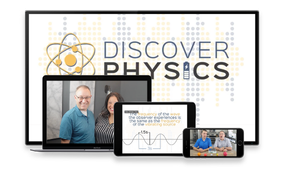
Two engaging video lessons for every weekly module to help your child understand new and exciting concepts without feeling overwhelmed
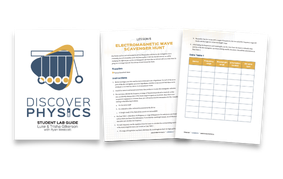
Carefully planned lab work with corresponding lab video lessons throughout the year so your child can experience biology — hands-on!

Online, graded quizzes and exams, so you can take a break from correcting your child’s work

Homework questions & practice equations to help your student apply the concepts covered in this course.
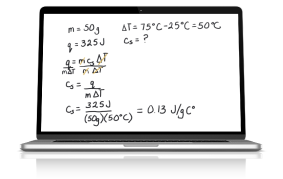
Homework help videos to assist your student when they get stuck, with step-by-step guides through the tricky math
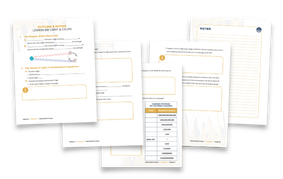
Lesson outlines to help your student grasp important concepts, learn new terms, and help with note taking
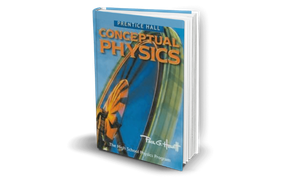
Optional reading assignments that will help your student further their understanding of the course material
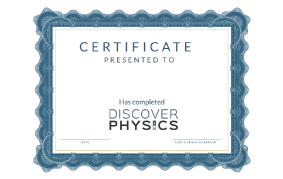
Certificate of completion for a job well done when the course is completed
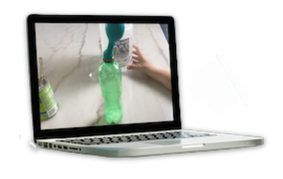
Lab demonstration videos so your student can still participate even if they don’t have all the supplies
Still deciding? Explore your options.
Choose the next step that fits your student best.
Discover how matter works through reactions, experiments, and the building blocks that shape the world around us.
Explore living systems—from cells and genetics to ecosystems—through hands-on labs and real-world connections.
Uncover the laws that govern motion, energy, and forces through interactive lessons and practical applications.